Your roof does a lot of heavy lifting, and nowhere more so than at the very top, where the two sides meet. That join is protected by ridge capping, and when the mortar holding it in place starts to crack, crumble, or wash away, your home becomes vulnerable to leaks, pests, and costly structural damage.
Understanding ridge capping repair costs (and more importantly, why the work matters) can save you thousands of dollars down the track.
Quick Answers
- Ridge capping is the row of curved tiles that seals the peak of a tiled roof.
- Repointing replaces the old, degraded mortar that holds those tiles in place.
- Most homeowners should repoint every 10–20 years, depending on conditions.
- Ignoring failed pointing leads to leaks, structural movement, and far higher repair bills.
- Ridge capping repair cost in Perth typically ranges from $600 to $3,000+, depending on roof size and condition.
What Is Ridge Capping?
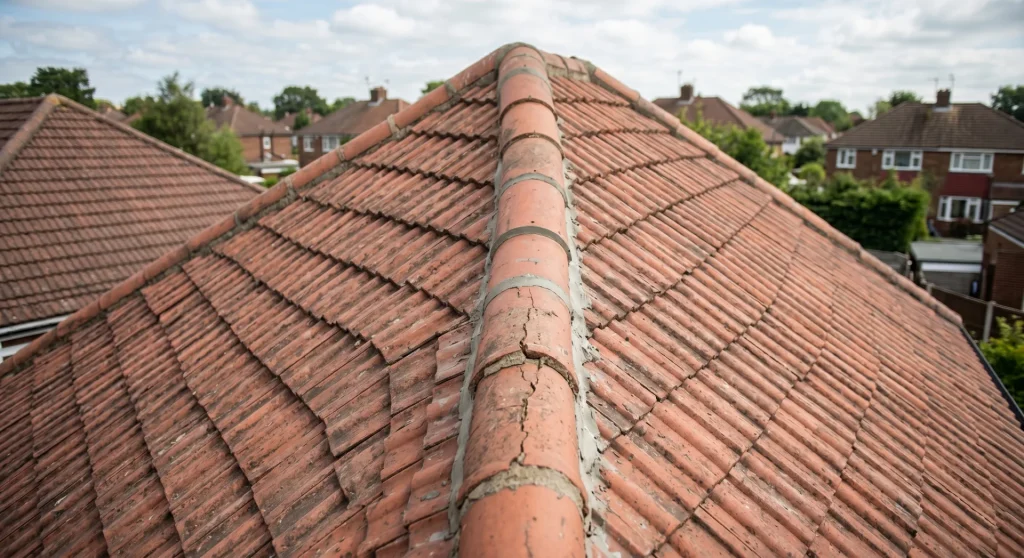
Ridge capping refers to the row of specially shaped tiles (usually curved or angled) that run along the apex (the ridge) of a tiled roof. Their job is to seal the join where two roof planes meet, preventing wind-driven rain, debris, and pests from entering the roof cavity.
In Western Australia, most homes built from the 1960s onward feature terracotta or concrete ridge cap tiles bedded into a sand-and-cement mortar mix and finished with a flexible pointing compound. Over time, thanks to Perth’s intense UV exposure, summer heat cycles, and winter storm activity, both the mortar bed and the pointing can crack, shrink, and eventually fail.
When that happens, the tiles are no longer firmly anchored. They can shift, slip, or even blow off entirely in high winds.
What Is Ridge Cap Repointing?
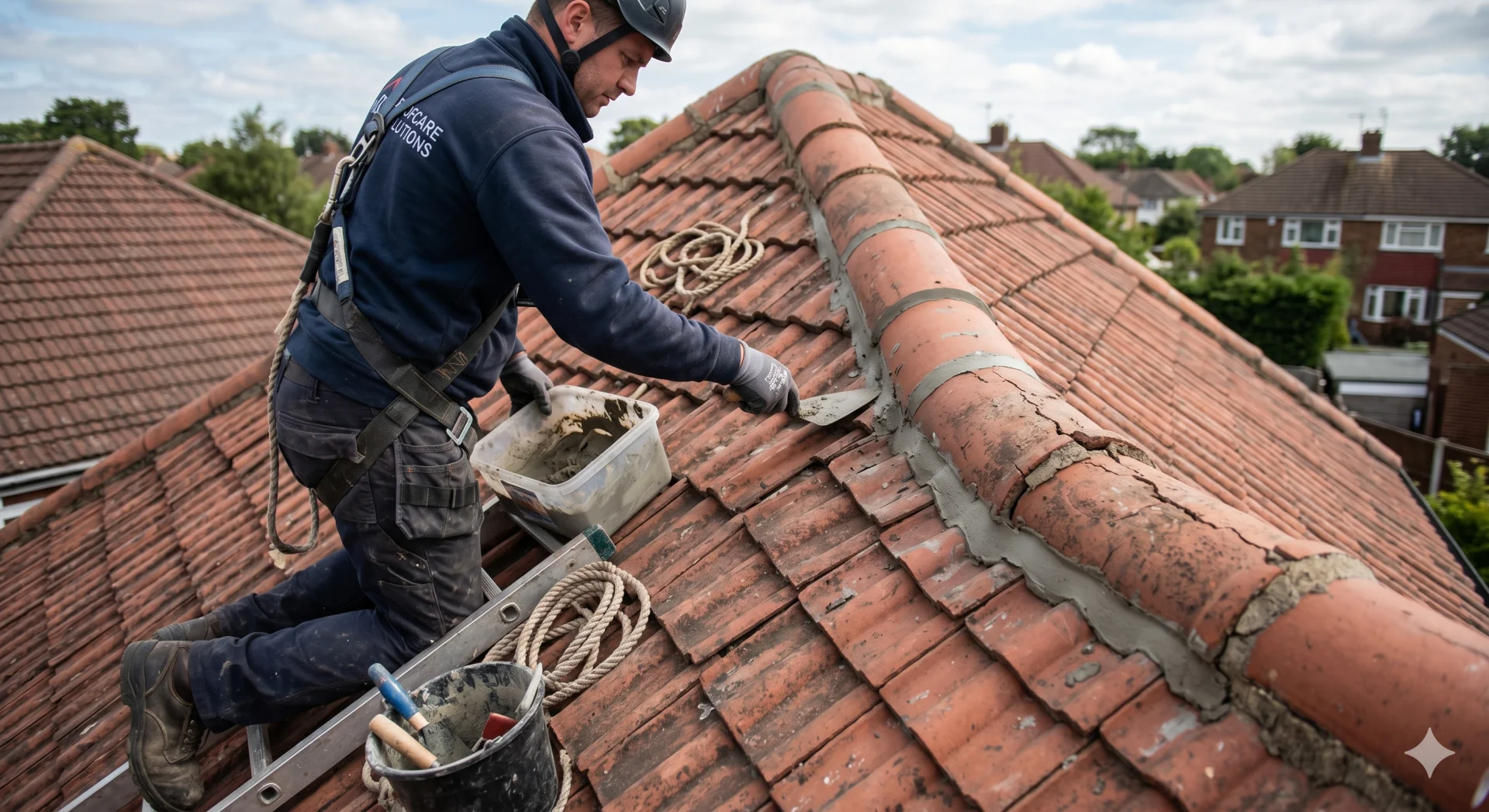
Repointing (also called re-bedding and repointing, or simply roof repointing) is the process of removing old, failed mortar and pointing material and replacing it with fresh compound that bonds and seals the ridge cap tiles back into position.
A full repointing job typically involves:
- Inspecting the entire ridge line for cracked, loose, or displaced tiles.
- Removing the old mortar bed and deteriorated pointing, either mechanically or by hand.
- Re-bedding tiles that have shifted, using a fresh sand-and-cement mortar mix.
- Applying fresh pointing compound, usually a flexible, polymer-modified product that can handle Perth’s thermal movement.
- Sealing and blending the finish for a watertight, weather-resistant result.
Some contractors only quote for repointing (the surface compound) without addressing the mortar bed beneath. Always confirm whether a quote covers both re-bedding and repointing if your tiles have moved; otherwise, you’re putting a fresh face on an unstable foundation.
How Much Does Ridge Capping Repair Cost in Perth?
Ridge capping repair cost in Perth varies based on several factors:
- Roof size and ridge length. A small single-storey home might have 10–15 linear metres of ridge; a larger two-storey home could have 30+ metres.
- Condition of existing mortar. If the bed is completely failed, re-bedding adds time and material cost.
- Tile type. Terracotta and concrete tiles differ in how they’re handled.
- Access difficulty. Steep pitches or multi-storey homes require more safety equipment and time.
- Number of ridge tiles to replace. Cracked or broken tiles need replacement, not just repointing.
As a general guide, Perth homeowners can expect:
| Scope | Estimated Cost |
| Minor repointing (surface only, small section) | $600 – $1,200 |
| Full repointing (whole ridge line, single storey) | $1,200 – $2,200 |
| Full re-bed and repoint (whole ridge, major work) | $2,200 – $3,500+ |
| Plus tile replacements, if needed | $30 – $90 per tile |
These figures are indicative. Ridge capping repair costs vary by property, so a proper on-site inspection is the only way to get an accurate quote. Be cautious of very low quotes. Cutting corners on mortar quality or skipping re-bedding can mean the job fails within a few years.
How Long Does Roof Repointing Last?
A well-executed repointing job using quality flexible pointing compound should last 10 to 20 years in Perth’s climate. So, how long does roof repointing last in practice? It depends on:
- Product quality. Cheap, rigid cement-only mixes crack faster under thermal cycling than polymer-modified flexible compounds.
- Workmanship. Proper surface preparation and application technique make a significant difference.
- Roof pitch. Steeper roofs shed water faster and tend to see less prolonged moisture exposure.
- Tree coverage. Overhanging branches deposit debris and moisture, accelerating mortar breakdown.
- Perth’s climate. High UV, summer temperatures exceeding 40°C, and thermal expansion cycles put mortar under more stress than in cooler climates.
If your home’s pointing was done 15+ years ago, or if you can see cracks, gaps, or movement in your ridge tiles, it’s worth having a licensed roofer inspect the ridge line. Waiting until you have a confirmed leak usually means the damage has already progressed into the roof structure.
What Are the Benefits of Ridge Cap Repointing?
The benefits of ridge cap repointing go well beyond just “keeping the tiles on.” Done at the right time, it’s one of the best value maintenance investments a Perth homeowner can make.
- Prevents water ingress: Failed pointing is one of the leading causes of roof leaks in Perth. Once water gets past the ridge line, it can saturate sarking, damage timber battens and rafters, promote mould growth in the ceiling cavity, and eventually stain or damage internal ceilings. A repoint at the right time stops this cascade entirely.
- Protects your structural timbers: Prolonged moisture exposure damages roof framing. Replacing saturated or rotted timber is significantly more expensive than repointing mortar.
- Keeps tiles anchored in high winds: Perth experiences severe wind events, including the tail ends of tropical systems moving south. Loose ridge tiles become projectiles in high winds. Repointing restores the mechanical bond holding every tile in place.
- Maintains your home’s value: Visible cracking or missing pointing on ridge capping is a red flag for property inspectors and buyers. Sound, well-maintained ridge work signals that a home has been well cared for.
- Avoids emergency repair costs: A reactive emergency roof repair in Perth almost always costs more than a planned maintenance job. If a displaced ridge tile causes a leak during a storm, you’re looking at after-hours call-out fees, potential water damage remediation, and disruption to your household.
These benefits of ridge cap repointing make a compelling case for treating it as a scheduled maintenance item rather than waiting for problems to appear.
When Should You Get Your Ridge Capping Repointed?
As a practical guide, consider having your ridge capping inspected if:
- It’s been more than 10–15 years since the last repoint.
- You can see cracks, gaps, or loose pointing when viewing the ridge from the ground (binoculars help).
- Any ridge tiles look displaced, lifted, or out of alignment.
- You’ve had a roof leak repair in Perth recently. Leaks near the ridge line often indicate failed pointing.
- You’re selling or buying the property and want a clear picture of roof condition.
You don’t need to wait for a visible problem. A routine inspection every 5 years is good practice for any tiled roof in Western Australia.
Jamart Roofing: Perth’s Ridge Cap Repointing Specialists
At Jamart Roofing, we’ve been handling roof repairs across Perth for residential and commercial clients for over 30years. Our team uses quality flexible pointing compounds suited to WA’s climate.
We provide honest, obligation-free quotes, price-beat guarantees and a clear breakdown of what’s needed and why. Whether your ridge line needs a targeted repoint or a full re-bed and repoint, we’ll give you a straight answer.
Call Jamart Roofing today for a free roof inspection and quote.